
The Paradox of Pain: Why More Fitness Information Leads to Worse Outcomes
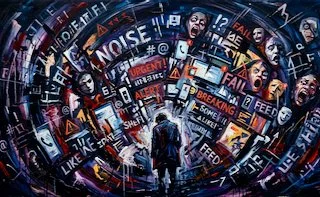
The modern fitness ecosystem: A self-perpetuating vortex of noise designed to monetize your anxiety.
The Paradox Nobody Is Talking About
For several weeks, I have been working on an article about a paradox in the online fitness influencer industry.
Why is it that, in this modern day, we have access to more fitness information than any generation before us, yet we are suffering more from chronic pain and injury than ever?
Then this morning, I came across a video by a YouTuber named Barry Ferns. The channel is called Barry’s Economics. The video is titled “Diary of a CEO Is Making You Less Successful.”
Barry’s argument is straightforward: the most popular success podcasts are not helping you succeed. They are monetizing your anxiety, selling you formulas that don’t work, and platforming the wrong people. More often, the more confident voices, not the competent ones.
I am familiar with Diary of a CEO. I spent time watching it over the past couple of years. I do not watch it much anymore, largely because I started to see many of the credibility issues that Barry outlines in this video.
As I was watching, I recognized everything he was describing. But not only in the success industry. It is also very strong in the fitness and health influencer industry.
More Information. Worse Outcomes.
We are living in a paradox. We are in the most documented era of fitness advice in human history:
Workouts & Nutrition plans
Recovery protocols
Mobility programs
More content. More access. More information. Yet, chronic pain is at its highest recorded levels and still rising. More information. Worse outcomes. Why?
The Loudest Voices Are Not the Most Qualified
The practitioners who build the largest audiences are the ones with the most marketable formulas. Simple, bold, and trend-driven. Designed to appeal to the largest possible audience.
Clarity is compelling. Confidence is persuasive. And the algorithm rewards both.
The problem is that the people most qualified to speak to pain, movement, and individual bodies are the same people who know too much to offer a formula. They have worked with enough individuals to understand that it is genuinely complex. That which works for one person may not work for another. The answer is rarely simple.
Those people do not go viral. They do not build followings. And so the loudest voices in fitness are, by the very nature of what it takes to build a following, among the least equipped to address your individual problem.
There is a name for this dynamic. The Dunning-Kruger effect is a cognitive bias in which people with limited knowledge or competence in a given area tend to overestimate their own knowledge or competence in that area greatly. The inverse also appears to be true. Those who develop genuine expertise often underestimate themselves, because they begin to see how much they do not know. Real expertise tends to breed humility. Limited knowledge tends to breed confidence. Which may help explain why the loudest voices in any field are often the least informed, and why the most qualified practitioners are frequently the quietest ones in the room.
The Planes That Made It Home
The fitness influencers you follow are the ones whose bodies survived the approach. There is a name for this. During World War II, bombers were returning from missions covered in bullet holes. Military commanders wanted to reinforce the areas of concentrated damage.
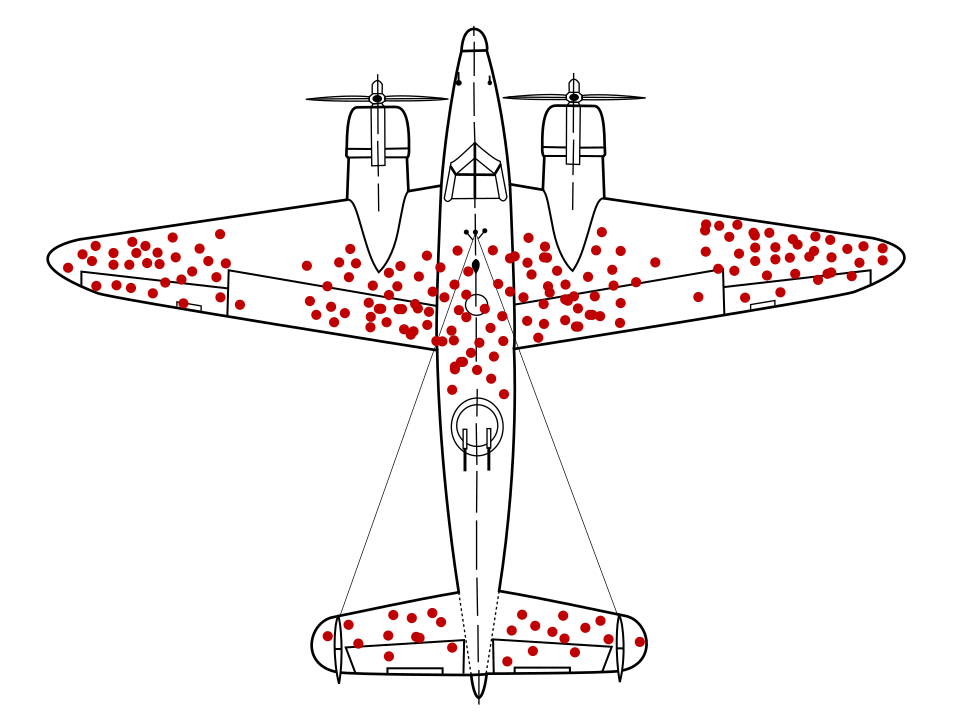
We study the survivors and ignore the casualties. In fitness, we only see the "planes" that made it home.
A statistician named Abraham Wald said no. Reinforce where the bullet holes are not. The planes you are looking at made it home. The planes that were damaged elsewhere never came back to tell you anything. That is survivorship bias. Specifically, you don’t see three invisible groups:
The Burnouts: People who followed the same programs but whose bodies or minds gave out.
The Excluded: People whose circumstances or physical limitations made the “formula” inaccessible from day one.
The Quiet Successes: People who found slower, lifestyle-based changes that actually worked, but aren’t “flashy” enough for social media.
All three groups are invisible. And because they are invisible, the surviving approach gets treated as the only approach. Not because it is the best approach. Because it is the one that accumulates the most likes, followers, subscribers, and profit, and, in a world where metrics, reach, and audience size equal credibility, that is all the proof most people need.
Luck and Genetics Are Not Part of the Formula
A significant part of why any fitness influencer with a million followers is standing in front of a camera has less to do with their method than most people assume. It may have more to do with whether their content is entertaining and well produced, when they started posting relative to where the platform and the algorithm were, and/or a single share from the right account on the right day.
And then there is the question of the body itself. The influencer’s physique is the primary marketing tool. It is what the audience aspires to. But it raises a question that rarely gets asked. Did the method produce the body, or did genetics? Would any reasonable program have produced similar results in that particular body? The honest answer is that we cannot know. But the method gets the credit regardless.
So the influencer looks back at their path, connects the dots, and builds a narrative. This program. This approach. This method. That is what worked. And then they sell it to you as a system.
A Solved Problem Is a Lost Customer
The fitness industry doesn’t exist to solve your problems; it exists to make you a consumer.
The Cycle of Consumption:
Step 1: Amplify anxiety (you aren’t lean/strong/optimized enough).
Step 2: Offer the “fix” (the book, workout program, full course, or supplement).
Step 3: Blame the user when it fails (you didn’t do it right).
Pay particular attention to supplements. Influencers often sell these products alongside their programs despite a total lack of supporting evidence. They rely on visual credibility—their own physique—as the only “proof” you need. But they carry the authority of the influencer’s body and brand, and in an industry built on visual credibility, that is often enough.
The ecosystem actually has no incentive to solve your problem. A solved problem is a lost customer.
The Problem Is Always You
When the approach does not work, the industry has a reliable response:
“You aren’t consistent enough.” (Even if the program is unsustainable.)
“You aren’t disciplined enough.” (Even if the advice is physiologically flawed.)
“You aren’t trying hard enough.” (Even when you are working yourself into chronic pain.)
Whether you are dealing with pain, struggling to build strength, hitting a wall with your stability, or simply working harder than ever and seeing less than you expected, the message is the same. Try harder. Do more. Buy the next thing.
The possibility that the approach itself may be flawed, or that creators never designed the information ecosystem you have been swimming in to address your actual problem, rarely enters the conversation.
Does This Resonate?
If any of this resonates, I encourage you to watch the video. Barry makes the case far better than I can summarize it here, and seeing the original argument may help you spot other parallels I missed.
And I am genuinely curious. Does this resonate with your experience? Is there something I got wrong? Something I missed entirely? I would rather have that conversation than pretend I have it all figured out.