

Understanding Chronic Pain: How Your Body Molds Over Time
Your body isn't a machine with separate parts that can break down independently; it's a living, interconnected system that's constantly adapting to how you move, where you hold tension, and how you treat it over time. Understanding this distinction changes everything about how you approach pain, stiffness, and movement.
To make sense of how your body actually works, think of it as four distinct yet interconnected elements. Fabric is your connective tissue network (fascia, ligaments, muscle sheaths), creating stability and transmitting force throughout your whole system. Springs push back when compressed, representing elastic recoil. Rubber bands pull when tensioned, creating sustained force through slack and stretch. Clay molds into permanent shapes based on how you move repeatedly over time.
Each of these elements operates on two timescales simultaneously: an immediate mechanical response and a long-term adaptation or degradation curve. How you move today shapes what your body becomes tomorrow.
Fabric: The Foundation of Connection
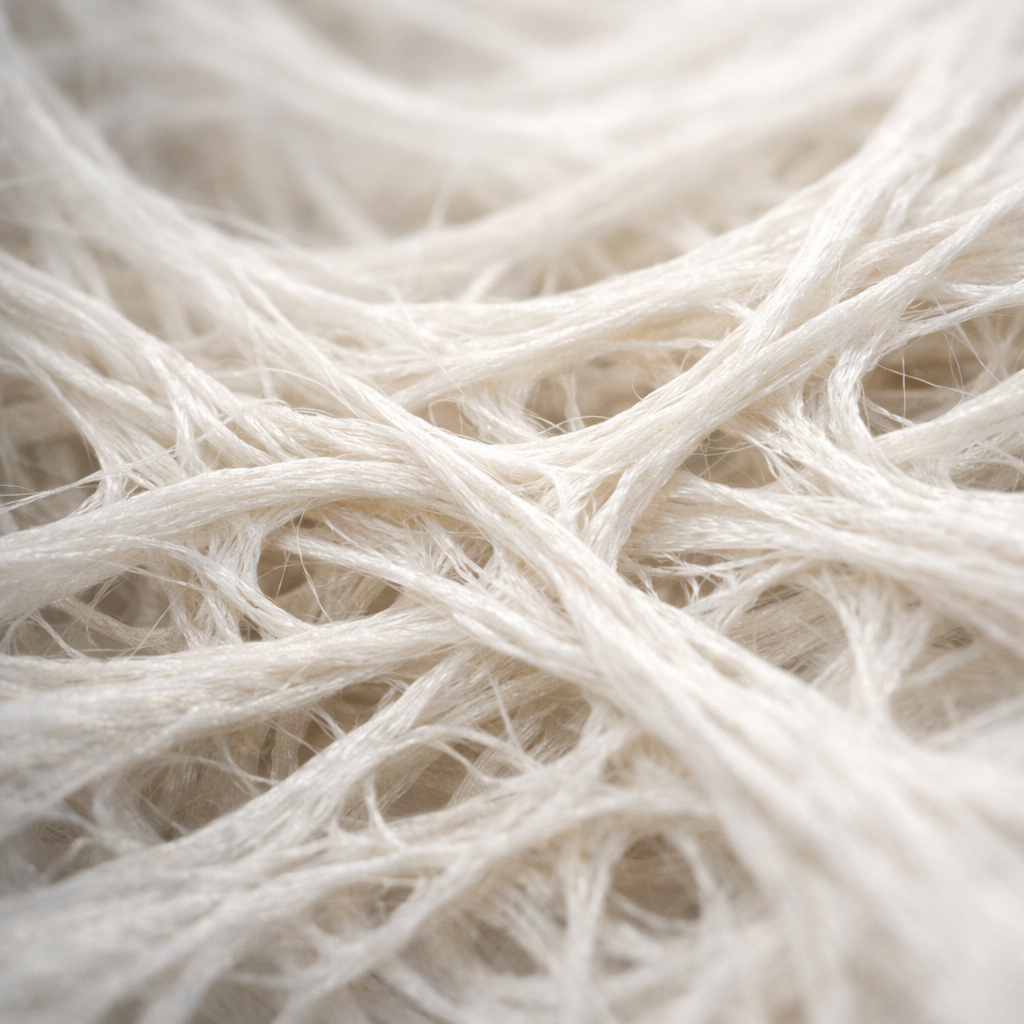
Fascia is a living three-dimensional web.
Think of fascia like the weave in a wool sweater - interconnected threads running throughout the entire garment and within its layers. Your body is exactly that, except the weave is three-dimensional and alive, running through every muscle, bone, organ, and system.
In a single walking step, your fabric does three essential things simultaneously:
It transmits force: Impact travels from your foot, up your leg, and into your opposite shoulder.
It maintains structure: Fascia holds everything in place, allowing you to stand upright.
It facilitates flow: Blood, lymph, and neural information move through the network constantly.
Springs: The Push-Back Mechanism
Imagine your gait as a pendulum. A well-balanced pendulum has two equal sides swinging around a center point of equilibrium. Each swing stores energy on one side and releases it on the other in a smooth, efficient cycle. Your body works the same way when you walk.
With every step, your body absorbs impact through heel strike. That force travels up through your foot, ankle, and leg, loading your entire fascial and skeletal system like a compressed spring. Your thoracolumbar fascia, your hip stabilizers, and your spinal segments all store that elastic energy. Then, as your weight transfers to the opposite leg, all that stored energy is released through push-off, propelling you forward efficiently. This happens with every single step you take, hundreds of times a day.
This spring mechanism only works efficiently when your pendulum is balanced. When both sides of your gait are equal (balanced weight distribution, symmetrical loading, counter-rotation between your hips and shoulders) the springs compress and release equally. Energy flows smoothly through your system.
Rubber Bands: The Pulling Mechanism
While springs provide the push-back power in your gait, rubber bands (your muscles and fascial slings) create the pulling tension that controls and shapes that power. Rubberbands don't work against springs. They work with them in a constant dynamic relationship.
As your body loads during heel strike, your rubber bands create compression and tension throughout your system. That tension loads your springs. Then, as your springs begin to rebound and push outward, that expanding force loads your rubber bands in return. They're constantly loading each other, each one tensioning the other in a beautifully opposed relationship.
This dynamic opposition creates boundaries. Your springs don’t overshoot and destabilize because your rubber bands restrain them. Your rubber bands don’t overpull or create excessive tension because your springs push back. When both are working well, you get smooth, controlled, efficient movement.
Clay: The Molding Mechanism
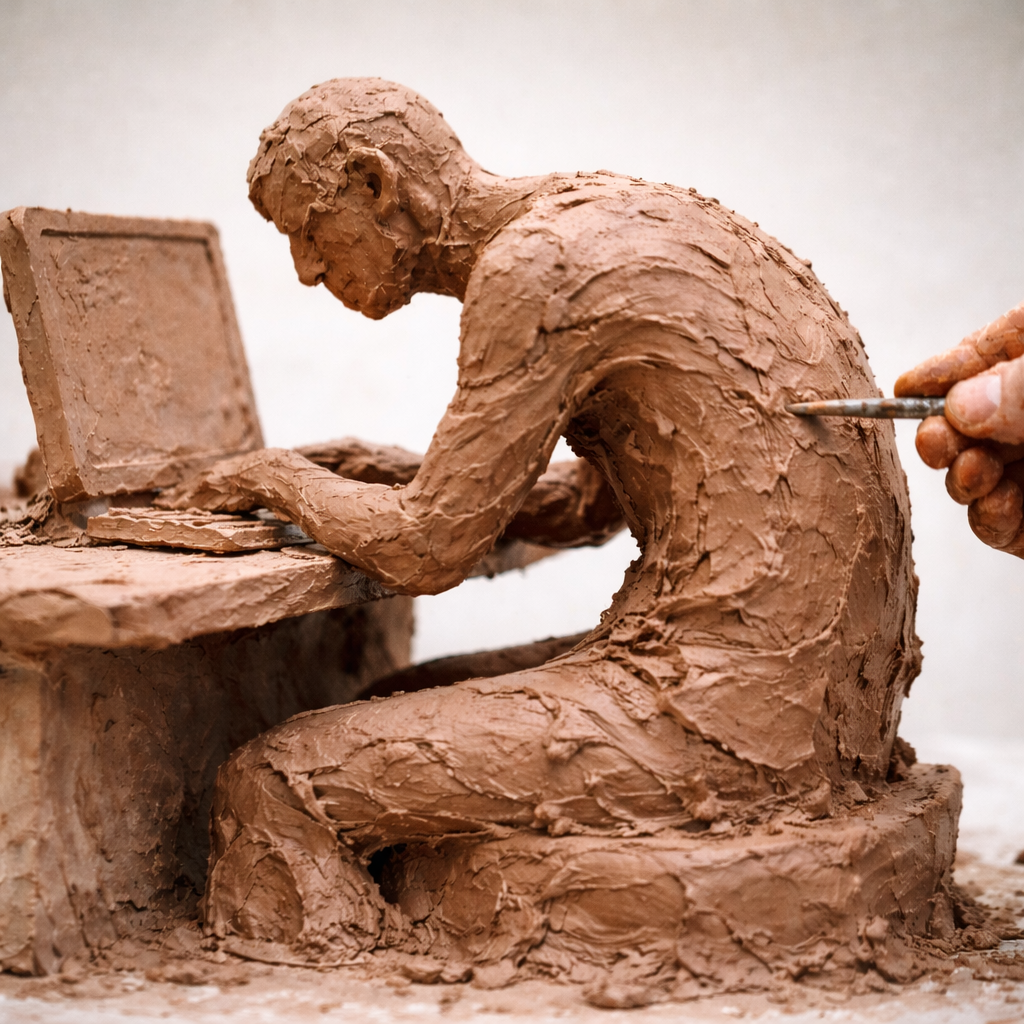
Your body adapts to what it experiences most.
Fresh clay is responsive and malleable. You can shape it, reshape it, and move it in different directions. But as clay ages and hardens, it loses that plasticity. It becomes fixed in whatever shape it was molded into. Your body works the same way.
Every day, with five to ten thousand steps, the way you move molds your body like soft clay. If you sit at a desk for eight hours, leaning forward with rounded shoulders, you're molding your spine, your ribs, your fascia into that forward-bent shape. If you walk with asymmetrical weight distribution, you're molding one side of your body differently from the other. These aren't permanent changes yet. Clay is still soft. You can reshape it with different movement choices.
But here's what happens over years and decades: that repetitive molding gradually hardens your clay. The collagen in your tissues adapts to that shape. Your nervous system learns that posture as normal. What was once malleable becomes fixed.
The person who spent twenty years hunched over a desk can no longer stand fully upright, even if they try. Their clay has hardened into that shape permanently. There's a threshold where reshaping becomes impossible. The good news is that if you catch it early and make intelligent movement choices now, you can reshape your clay. But if you wait too long, you lose that option permanently.
How Movement Shapes Your Body Over Time
Your body is all four elements working simultaneously (fabric, springs, rubber bands, and clay), each operating on two timescales: immediate mechanical response and long-term adaptation or degradation.
When your gait is balanced and efficient, all four elements thrive. Your fabric remains supple and responsive, transmitting force fluidly through an interconnected network. Your springs store and release energy equally on both sides, maintaining that balanced pendulum. Your rubber bands stay elastic and responsive, creating smooth boundaries with your springs. Your clay stays malleable, responsive to new movement patterns. With five to ten thousand steps a day, balanced movement continuously reinforces resilience in all four systems.
But when your gait becomes imbalanced through poor movement patterns or injury, all four elements suffer simultaneously. Your fabric begins to weather. One side loads more heavily, creating a restriction and limiting flow. Your springs degrade unevenly. The overloaded side fatigues while the underloaded side weakens from disuse. Your rubber bands fatigue. The tight side loses elasticity while the slack side loses tone. Your clay hardens into dysfunction. Years of asymmetrical loading mold your structure into a fixed imbalance.
The critical truth is this: small imbalances compound daily. With five to ten thousand steps a day, poor movement patterns are reinforced constantly, gradually hardening your structure into permanent dysfunction. But the reverse is also true. Balanced, intelligent movement choices today reshape your body toward resilience and health. The question is which direction you're moving with every single step that you take.
Your body is being shaped right now. With every one of those five to ten thousand daily steps, you're either building resilience or reinforcing breakdown.
Awareness interrupts the loop.
Start with an assessment. Take the TAOFit Daily Movement Assessment. Awareness interrupts the loop. As you move through it, notice where the fabric transmits force smoothly and where it's restricted. Feel where springs store and release energy. Notice where rubber bands create boundaries. Feel where clay is being molded by your most repeated patterns.
Small, intelligent movement choices today reshape the architecture of tomorrow, step by step, breath by breath.
You can't opt out of adaptation. But you can choose what you adapt to.